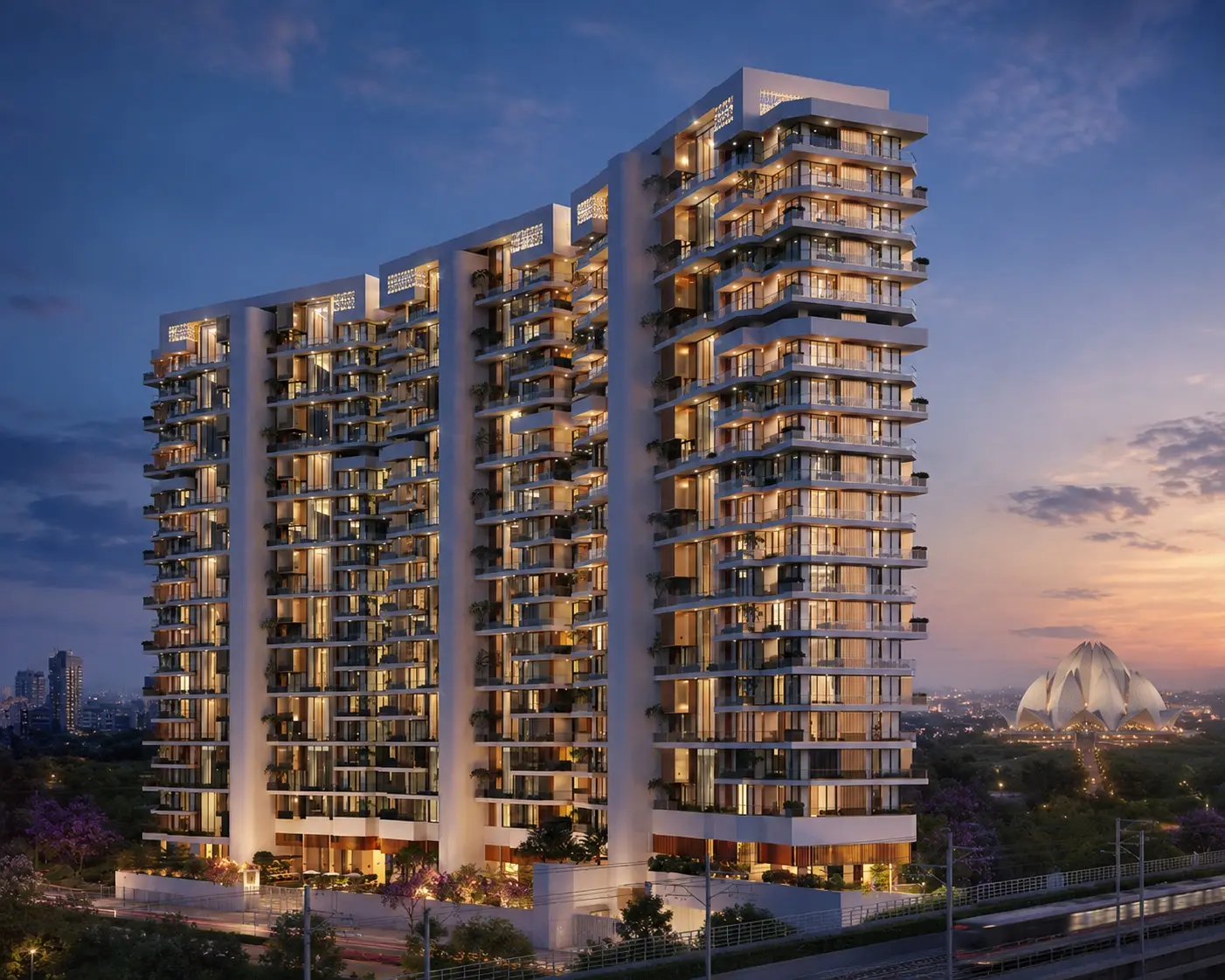
Kreeva Swaranaya is registered under Delhi RERA number DLRERA2026P0007 — and understanding what that registration actually protects is more useful than just knowing the number exists. This guide walks through what RERA registration means in practice, how escrow protection works for your payments, and exactly how to verify all of it yourself before booking.
Key Takeaways
- Kreeva Swaranaya's Delhi RERA registration number is DLRERA2026P0007
- RERA registration legally mandates that buyer payments go into a project-specific escrow account, ring-fenced from other developer expenses
- You can independently verify any project's RERA status on the official Delhi RERA portal — never rely solely on a brochure or sales claim
- RERA registration also fixes the disclosed possession date (December 2031 for Kreeva Swaranaya) as a legally tracked commitment
- RERA doesn't eliminate all risk — it's a legal framework, not a guarantee of construction quality or timeline adherence
It's also worth noting that RERA compliance requirements extend beyond the registration and escrow mechanism covered here -- developers are also required to provide periodic project updates through the RERA portal, including construction progress, which buyers can review directly rather than relying solely on updates from the sales team. Checking these periodic filings occasionally through the course of your ownership, particularly during the construction period, is a low-effort way to independently track whether a project is progressing as disclosed.
What Kreeva Swaranaya's RERA Registration Covers
The Real Estate (Regulation and Development) Act, 2016 requires developers to register projects above a certain size threshold with the state's RERA authority before marketing or selling units. Kreeva Swaranaya's registration — DLRERA2026P0007 — is filed with the Delhi RERA authority and covers the project's sanctioned layout, disclosed possession timeline, and the developer's legal obligations toward buyers for this specific project.
Why the Escrow Account Matters More Than the Number Itself
The single most practically important RERA requirement for buyers is the escrow mandate: at least 70% of the funds collected from buyers for a registered project must be deposited into a separate, project-specific bank account, and can only be withdrawn for construction and land costs related to that specific project — not diverted to any other purpose, including the developer's other projects. This is the structural protection that distinguishes a RERA-registered new booking from an unregistered or resale transaction: your payment milestones are legally tied to construction progress on this specific project, not to the developer's broader finances.
At least 70% of collected funds go into a dedicated project account · Withdrawals are restricted to construction & land cost for this project · Funds cannot be diverted to other developments · Registered professionals must certify each withdrawal stage
How Kreeva Swaranaya's Payment Plan Connects to RERA Protection
Kreeva Swaranaya follows a milestone-linked payment plan — 10% on booking, 10% within 90 days, 10% within 180 days, 20% on 5th floor slab completion, 20% on super structure completion, 20% on OC application, and 10% on OC receipt. Because this project is RERA registered under DLRERA2026P0007, each of these payments is legally required to flow into the project's escrow account, which is the mechanism that connects your specific payment schedule to the RERA protection described above.

How to Verify DLRERA2026P0007 Yourself
- Visit the official Delhi RERA portal and search the registration number DLRERA2026P0007 directly — never rely solely on a brochure screenshot or third-party website claiming to show RERA status.
- Cross-check the project name, promoter name, and address shown on the RERA portal against what's stated in your booking documents.
- Review the disclosed possession date on the RERA filing (December 2031 for Kreeva Swaranaya) and confirm it matches what the sales team has told you.
- Check for any complaints or orders logged against the project or promoter on the RERA portal, which is public information.
- Ask the sales team directly for the RERA certificate copy as part of your booking documentation, rather than relying only on the number printed in marketing material.
What RERA Doesn't Guarantee
It's worth being clear-eyed about the limits of RERA protection. Registration confirms a legal and financial framework — escrow protection, disclosed timelines, and a regulatory body buyers can approach for grievances — but it doesn't independently guarantee construction quality, that the developer will hit the disclosed timeline exactly, or that market conditions will move in your favour. RERA reduces a specific category of financial risk (fund diversion) significantly; it doesn't eliminate all real estate investment risk. Buyers should still conduct standard due diligence — reviewing the developer's track record, visiting the site, and having a property lawyer review the Flat Buyer's Agreement — alongside checking RERA status.
What to Ask Before You Book
- Can I get a copy of the RERA certificate as part of my booking documentation?
- How exactly does each payment milestone map to a specific, verifiable construction stage?
- Who are the registered professionals certifying escrow withdrawals for this project?
- What happens contractually if the possession date shifts beyond what's disclosed on RERA?
What Happens If a Developer Defaults or Delays
RERA gives buyers specific, legally defined recourse if a registered project faces significant delays or the developer fails to meet disclosed obligations. Buyers can approach the state RERA authority (Delhi RERA, in this case) with a formal complaint, and remedies can include compensation, interest on delayed possession, or in some circumstances, a refund with interest — the exact outcome depends on the specific facts of each case and is determined through the RERA adjudication process, not automatically. This is meaningfully different from the pre-RERA era, where buyers in delayed projects often had limited formal recourse beyond civil litigation, which is typically slower and costlier. It's worth understanding that this recourse exists specifically because the project is RERA registered — which is one more reason independently verifying registration status (DLRERA2026P0007, in Kreeva Swaranaya's case) matters before you commit.
Reading the Fine Print: Beyond Just the Registration Number
The RERA portal listing for a project typically includes more than just a registration number — it shows the sanctioned plan, the promoter's other registered projects (useful for checking track record), and any regulatory actions taken against the project. Spend time on the full listing, not just confirming the number exists. If the promoter has multiple registered projects, briefly checking their status and any associated complaints can be a genuinely useful, low-effort way to gauge how the developer has performed on past commitments, before you commit significant capital to a new one.
Want the RERA Certificate & Payment Plan in Writing?
Our sales team can share the RERA documentation and full payment schedule for Kreeva Swaranaya directly.
Enquire Now WhatsApp Us